Gender shapes humanitarian diplomacy in ways that are often overlooked.
It affects who is recognised as a legitimate negotiator, who gains access, and whose priorities make it onto the agenda.
Yet research on gender and humanitarian diplomacy remains limited, and the gap has real consequences for humanitarian outcomes.
What is humanitarian diplomacy?
Humanitarian diplomacy is how practitioners persuade decision-makers and opinion leaders to act in the interests of vulnerable people, while respecting humanitarian principles and international law.
To do so, they use their negotiation skills, such as analysing the context, mapping influential stakeholders, finding common ground, and thinking creatively and strategically.
Over the last few years, humanitarian diplomacy has emerged as a pivotal tool for navigating complex crises, a shrinking humanitarian space, and growing political fragmentation.
Part of CCHN’s work is to help humanitarian and diplomatic professionals strengthen their diplomacy practice and bridge the gap between field realities and diplomatic efforts.
Gender shapes more than representation
Despite humanitarian diplomacy’s growing relevance, research on how it works in practice is limited. There are even fewer studies on how gender shapes diplomatic engagement and their repercussions on humanitarian outcomes.
At a time when humanitarian actors are rethinking how to deliver humanitarian assistance with greater focus, efficiency and prioritisation through the “Humanitarian Reset,” an important opportunity presents itself to strengthen women’s influence in humanitarian diplomacy.
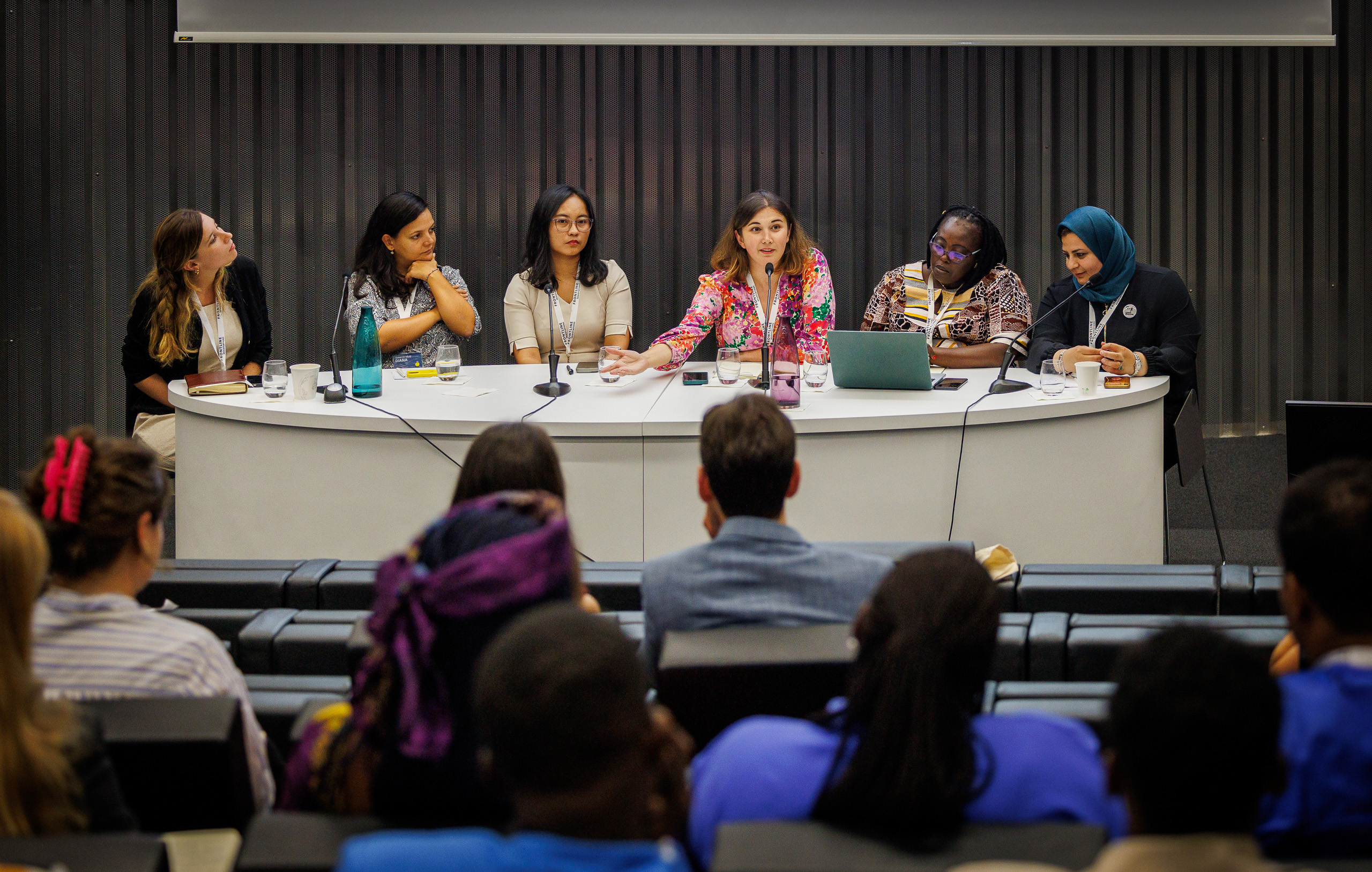
At an event organised by CCHN and Oxfam, women leaders from crisis-affected contexts shared concrete experiences of navigating diplomacy, access and protection risks while facing exclusion from formal decision-making spaces.
Their experiences reinforced an important reality: gender alone does not determine who can negotiate effectively.
However, it does shape:
- Who is recognised as a legitimate negotiator
- Who secures access
- Who influences decisions
- Who is trusted and able to build relationships
- Whose risks and priorities are recognised
- Whose leadership and expertise are taken seriously within humanitarian diplomacy spaces
Contrary to what gender stereotypes might make us believe, women lead humanitarian diplomacy efforts every day. They negotiate with de facto authorities, armed actors, communities, humanitarian agencies and diplomatic representatives, all to secure protection, services and access. They often do this at significant personal risk.
Despite this, humanitarian and political negotiations remain largely male-dominated, while women-led organisations and local actors are too often confined to consultation roles without real decision-making power.
Buying into the gender myths around women’s abilities to successfully negotiate in favour of the communities they serve actually makes humanitarian diplomacy efforts less effective.
Applying a gender lens to the six steps for effective humanitarian diplomacy
CCHN’s research has produced a humanitarian diplomacy framework built around six steps:
- Defining priorities
- Mapping actors
- Understanding interests
- Framing messages
- Proposing alternatives
- Developing tactics and strategies.
In this blog, we will apply a gender lens to highlight a few gaps that, once identified, can help you build an even more efficient humanitarian diplomacy strategy.

Step 1: Defining priorities through a gender lens
Effective humanitarian diplomacy starts with identifying the problem and defining which issues require engaging diplomatic channels.
Looking at this step through a gender lens, we go one step further and ask: who defines the problem, and who decides whether it should be prioritised?
By asking yourself whose perspective is shaping the agenda, you can identify risks and needs that might be missing.
In other words, “if you are not at the table, you are on the menu.”
When women are excluded from decision-making processes, others get to define priorities, negotiate trade-offs, and shape outcomes that affect women’s daily lives.
This leads to women’s concerns, analyses, and priorities being insufficiently reflected in formal humanitarian and political decision-making spaces. Frequently, women-led organisations and local actors are consulted, but too rarely are able to influence strategic priorities, funding decisions or diplomatic engagement.
Applying a gender lens to humanitarian diplomacy helps you identify what issues no one else is raising.
When deprioritisation has a human cost
In Ukraine, reductions in foreign aid have significantly affected women, girls and LGBTQI+ communities by cutting programmes to prevent and respond to gender-based violence. One survey found that 93% of women-led organisations had been forced to suspend at least one such programme. [1] When protection and gender-related concerns are deprioritised, populations most exposed to harm risk being overlooked. For humanitarian practitioners facing similar cuts, recognising that this is a real problem that must be prioritised (step 1) can mean it’s time to escalate it through diplomatic channels.
Step 2: Gender-sensitive stakeholder mapping
Mapping stakeholders is a core step for effective humanitarian diplomacy. It helps identify who influences a negotiation or policy process, who may support or obstruct humanitarian objectives, and where leverage may exist.
Who really holds influence?
In both humanitarian and diplomatic contexts, influence extends beyond formal channels.
While states, UN agencies and international non-governmental organisations often dominate official discussions, local authorities, community leaders, civil society groups, religious actors, and affected populations themselves all shape outcomes and access on the ground.
A gender lens on stakeholder mapping
From a gender perspective, mapping stakeholders can help you shed light on who is (and isn’t) represented and included in humanitarian diplomacy spaces, which, as we’ve mentioned, shapes which priorities are recognised and acted upon.
Often, women’s groups and civil society organisations are the ones who speak with armed actors and negotiate humanitarian access, temporary pauses in violence, or civilian protection. Despite this, women-led organisations still tend to be treated as mere executors of operations, rather than strategic actors or negotiators.
Diplomacy remains a heavily male-dominated field. Around 85% of heads of state or government and ambassadors are men, and around 77% of parliamentary seats are held by men. [2]

Noémi Krauer, Program Officer, Humanitarian Diplomacy, Peace and Human Rights Division Swiss Federal Department of Foreign Affairs
“For me, humanitarian diplomacy is about bridging and translating between humanitarian and diplomatic actors. Gender matters in this process because it shapes access, legitimacy, and the ability of different actors – including women – to set the agenda and to engage. Ensuring that women’s expertise and gender-related issues are effectively integrated is not only a question of inclusion, but of contributing to more informed, and ultimately more effective humanitarian diplomacy.”
Applying a gender lens when mapping stakeholders means actively identifying women and women-led organisations, as well as informal networks.
It means assessing not only who is formally present “in the room” but who has real influence: who shapes agendas, who communities trust, and whose perspectives are systematically excluded from negotiations and decision-making processes.
Recognising women’s leadership on the ground
The Emergency Response Rooms (ERR) is a community-led initiative that has provided humanitarian response in Sudan since 2019 and illustrates why gender-sensitive stakeholder mapping matters in humanitarian diplomacy. The ERRs comprise local, civilian, and often women-led grassroots groups that provide humanitarian aid and respond to women’s specific humanitarian needs. [3] They became a lifeline for communities in hard-to-reach areas, despite remaining outside formal coordination and diplomatic spaces. Not including these actors in a stakeholder mapping exercise means overlooking some of the most trusted and operationally effective channels for constructive engagement.
Step 3: Understand needs, interests and gendered perceptions
To persuade others to act in favour of humanitarian goals, it’s important to understand what lies beneath their stated position.
This step requires moving beyond superficial statements and analysing the underlying reasoning and values that shape a counterpart’s behaviour.
How does gender shape a counterpart’s position?
Humanitarian diplomacy doesn’t operate in a gender-neutral environment. Most societies associate authority and leadership with men, and these assumptions don’t disappear at the negotiation table.
Our perception of how credible our negotiation counterpart is depends not only on their job title and their place in the hierarchy, but also on their personal characteristics, including gender and age.
Often, male counterparts expect to negotiate with another man. Likewise, humanitarian teams might select a male negotiator based on the assumption that their interlocutors might prefer speaking with a man.
Women might not be granted access to decision-makers or armed actors because they are deemed illegitimate or inexperienced. One female humanitarian staff member explained that her counterparts preferred speaking to her male driver rather than to her, despite being the project lead.
However, the reality is that women already negotiate with armed groups or high-level decision-makers.
On the other hand, some women negotiators report that being perceived as less threatening by their male counterparts has facilitated dialogue and access.
Women negotiators have also described a “surprise effect”, where their male counterparts weren’t expecting to negotiate with a woman, and yet it opened access or made trust-building easier. [4]
When access is shaped by gender norms
In Afghanistan, authorities barred Afghan women from working for humanitarian organisations or travelling to field locations. These restrictions severely limit organisations’ ability to reach affected populations, particularly women and girls. However, this new reality hasn’t stopped women humanitarian staff, including senior leaders and negotiators, from finding creative ways to negotiate, maintain relationships, and successfully influence humanitarian outcomes. For instance, many have found ways to negotiate through male intermediaries when counterparts refuse to speak with them directly.
From a humanitarian diplomacy strategy perspective, understanding and acting on restrictive measures requires looking beyond the counterpart’s position and analysing the underlying values, norms, and perceptions of gender roles. Even when women are imposed with severe restrictions, there is significant humanitarian diplomacy potential that can emerge when they create meaningful opportunities to engage and lead.
For effective humanitarian diplomacy, we need to analyse what counterparts say, as well as the assumptions, values and social norms underpinning their positions.
Women humanitarian negotiators and women-led organisations often possess critical knowledge, trusted networks, and access pathways that may be undervalued in formal diplomatic or humanitarian discussions due to gender stereotypes.
Step 4: Framing messages in gender-sensitive diplomacy
Now it’s time to frame your objectives and messages strategically.
In humanitarian diplomacy, how an issue is framed can fundamentally shape whether negotiations gain traction, support, and are well received. It also affects legitimacy, trust and room for negotiation. And ultimately, it shapes the outcomes that become politically and operationally possible.
From a gender perspective, messaging matters because women are often spoken about as either “victims” of conflict or “beneficiaries” of humanitarian aid, rather than leaders or negotiators with agency.
Women-led and local organisations are particularly aware of how messaging influences how they are perceived. Many have felt pressured to avoid language perceived as “too political”, for instance, when describing power dynamics, protection risks, or patterns of exclusion affecting their communities.
Yet humanitarian diplomacy operates in inherently political environments, where access, protection and assistance are shaped by power dynamics.
Working with local actors means recognising the realities they navigate daily, and letting that shape how you frame your messages.
Tip: Distinguish clearly between objectives (what you want to achieve) and messaging (how you frame it to resonate with counterparts).
For example, the objective may be to keep women humanitarian staff in an environment where they are barred from working, while messaging could frame their presence as essential for reaching women and girls and delivering humanitarian assistance (rather than a message centred on women’s rights, which may resonate less depending on your counterpart).

Miro Modrusan, independent humanitarian practitioner
“Despite disproportionately facing the hardships of war, women remain indispensable to humanitarian efforts. In many contexts, women are able to access different communities across frontlines, in ways others cannot, and negotiating with diverse actors provides them with a nuanced understanding of community needs and emerging protection risks. However, the instrumentalisation of women’s rights to justify geopolitical or military agendas can erode local trust. To navigate these complexities, it is essential to meaningfully integrate women into humanitarian diplomacy while strictly adhering to International Humanitarian Law (IHL), humanitarian principles and UN Security Council resolutions. Doing so is not merely a choice – it is a requirement for building trust and ensuring effective outcomes.”
Step 5: Building alternatives with gender-diverse teams
The next step is to prepare multiple negotiation scenarios and possible alternatives.
Starting a negotiation by putting forward your preferred objective can increase the chances of a successful outcome. However, you should also be ready to explore alternatives if the ideal outcome proves unattainable or politically sensitive.
From a gender perspective, proposing alternatives means widening the range of perspectives involved in the negotiation process. Diverse negotiation teams, including diversity in gender, background, expertise and experience, often generate more creative and context-sensitive options.
Gender diversity strengthens humanitarian engagement: it improves contextual understanding, broadens community access, and helps teams read different counterparts and risks more accurately.
Building alternative scenarios involves considering different operational arrangements, alliances, and communication channels that account for gender dynamics.
When diversity changed the outcome
The 2015 Iran nuclear negotiations are often cited as an example of how high-level female diplomats played an influential role in brokering this major international agreement. [5] The talks were coordinated by and involved several senior women negotiators. Some later argued that having several women in key negotiating positions contributed to a more pragmatic, concrete and solution-oriented atmosphere during the negotiations.
Women negotiators or local women-led organisations may possess trusted community relationships, access to informal networks, or contextual knowledge that can enable alternative negotiations otherwise unavailable to formal actors.
Tip: Diversity means creativity. Build diverse negotiation teams to broaden the range of acceptable options, better anticipate risks, and identify more sustainable, context-sensitive outcomes.
Step 6: Gender-aware strategy in humanitarian diplomacy
An effective strategy comes from a thorough understanding of the context, objectives, actors, interests, and alternatives.
This also means recognising that humanitarian diplomacy takes place in a political environment, and accounting for gendered power dynamics.
In humanitarian diplomacy, practitioners often need to navigate multiple tensions simultaneously:
- Principled positions vs pragmatic operational compromises
- International norms vs local social or cultural norms
- Negotiating immediate humanitarian access vs advocating for broader rights and respect for international law
These dilemmas rarely have perfect solutions.
Remaining flexible and adapting your tactics is therefore crucial.
- Direct engagement: In some contexts, a woman diplomat or humanitarian negotiator may engage directly with political authorities or armed actors to build trust, clarify humanitarian concerns, or negotiate access. In other settings, however, direct engagement by female staff may be limited by social, cultural or political constraints that require adapting the negotiation channel or team composition.
- Indirect engagement: Instead of engaging directly, you may choose to work through intermediaries or trusted influencers. For example, local women leaders, women-led organisations, or respected religious figures may be better positioned to open dialogue, reduce tensions, or convey sensitive messages.
- Building alliances: Coalitions may help amplify issues that would otherwise remain marginalised in negotiations or policy discussions. Conversely, building an alliance with a partner who is not perceived as neutral may undermine the chance of finding common ground with your counterpart.
- Combined approaches: For example, work through alliances while maintaining bilateral dialogue with specific counterparts.
Tip: Adapt tactics continuously according to the context, actors, and gender dynamics at play, and design strategies that explicitly account for gendered power dynamics.
Moving from inclusion to influence
Humanitarian diplomacy is not gender neutral.
Gender shapes who is perceived as legitimate to negotiate, lead access conversations, and influence decisions. Besides representation, gender dynamics also affect how trust is built and the negotiation space available to reach tangible humanitarian outcomes.
When women and women-led organisations are excluded from negotiations, critical knowledge, trusted networks, and access pathways are overlooked. This leads to weaker negotiating positions, a lack of trust with communities, and less effective humanitarian outcomes.
This requires shifting from symbolic inclusion towards gender-sensitive negotiation and decision-making at every level. It means supporting women-led organisations, building diverse negotiation teams, sharing decision-making power, and recognising local women actors as strategic humanitarian and political actors in their own right.
Gender stereotypes and biases are an operational problem that directly weakens humanitarian diplomacy.
As the system rethinks its approach, integrating a gender lens across all six steps is essential for more credible, principled and effective engagement.
This blog was developed in collaboration with Oxfam as part of broader reflections on gender and humanitarian diplomacy.
References
[2] UN Women, 2026. “Facts and figures: Women’s leadership and political participation”(https://www.unwomen.org/en/articles/facts-and-figures/facts-and-figures-womens-leadership-and-political-participation).
Further reading
- “Humanitarian diplomacy: Humanitarians and their engagement with the diplomatic community” (CCHN, 2024)
- “Stuck in your negotiations? Use these 6 steps for effective humanitarian diplomacy” (CCHN, 2024)
- “Finding a way forward: 2 steps to come up with alternative solutions and develop a negotiation strategy” (CCHN, 2024)
- “Are men better negotiators? 7 gender myths harming humanitarian work (and how to overcome them)” (CCHN, 2025)
- “Women have a seat at the negotiating table” (CCHN, 2023)
- “She’s a woman, a leader and a frontline negotiator” (CCHN, 2021)
- “Legitimacy, diversity and women negotiators” (CCHN, 2021)
- “Rethinking humanitarian diplomacy through gender” (Oxfam, 2026)
- “Have you been recruited because you are a woman or because you are good?” (Turunen, Salla, 2023)
- “Gender Diversity Dynamics in Humanitarian Negotiations: The International Committee of the Red Cross as a Case Study on the Frontlines of Armed Conflicts” (Du Pasquier, 2016)
- “Gender and negotiator competitiveness: A meta-analysis” (Walters, Amy E., Alice F. Stuhlmacher, and Lia L. Meyer, 1998)
- “The Myth of the Male Negotiator” (Sutter et al., 2022)
- “Now, Women Do Ask” (Kennedy, Kray, & Lee, 2023)
- “Gender and Negotiation: New Research Findings” (Harvard Program On Negotiation, 2024)
Want more negotiation tips? Explore our other posts.