An outbreak has just been declared in a region you already struggle to reach. Roads you negotiated to open last month are closing again. Checkpoints multiply, and your teams are uneasy.
You have to make a call: is this emergency about to shut your access down even more, or has it just created a new reason to engage with actors who would not otherwise be willing to talk?
This is the dilemma you might have encountered when responding to health emergencies in conflict settings.
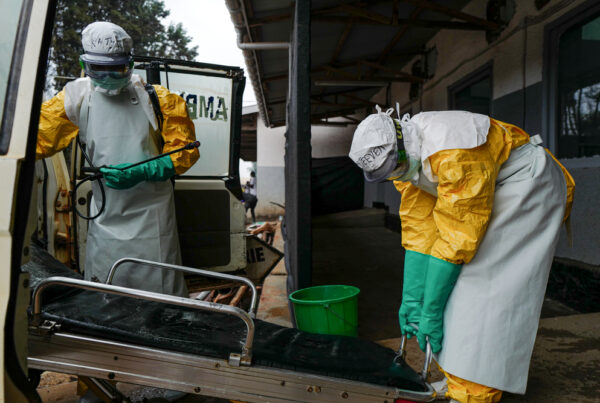
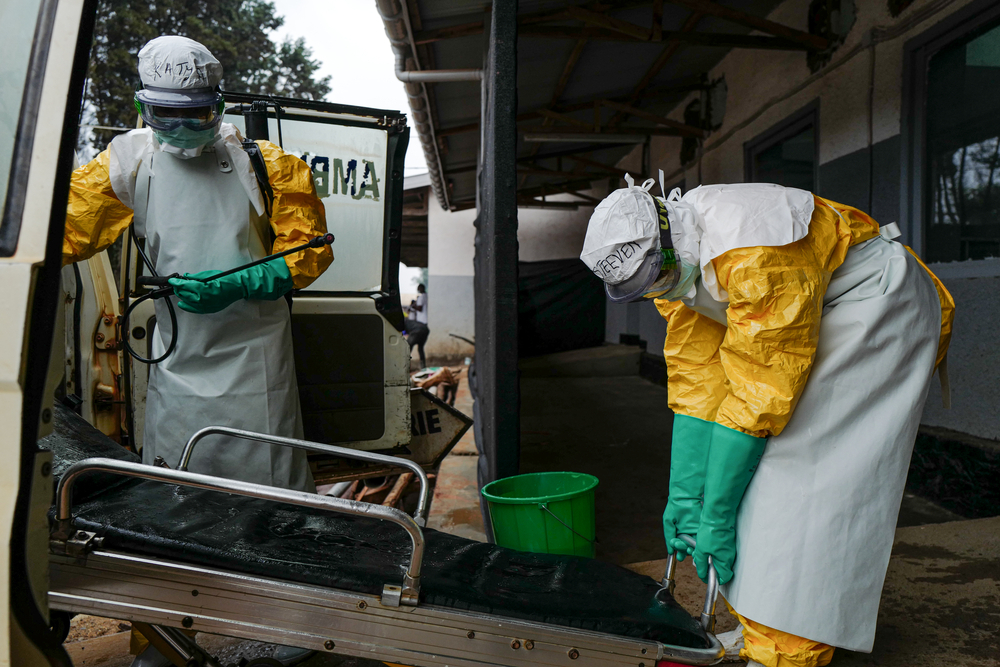
Experiences from Ebola outbreaks in the Democratic Republic of Congo (DRC), cholera responses in conflict-affected areas, and other public health emergencies show that outbreaks are neither “good” nor “bad” for access.
Rather, they amplify existing dynamics.
Outbreaks can deepen mistrust, tighten restrictions, and expose existing tensions; and they can create moments where actors with competing interests find common ground around protecting people from disease.
The challenge is understanding when a health emergency creates an entry point, and when it risks restricting or controlling your operation.
The real question then is: have you prepared to identify these openings, understand the interests behind different actors’ behaviours, and negotiate before the window closes?
At the Centre of Competence on Humanitarian Negotiation (CCHN), we spoke with practitioners working in DRC and other outbreak-affected contexts to explore this question.
Their experiences reinforced a recurring lesson: while epidemics are biomedical crises, they are also crises of trust, legitimacy, governance and access.
The opening: identifying shared interests in a fragmented environment
Outbreaks can create a negotiation opening.
In a fragmented landscape, an outbreak might push actors who rarely engage with each other to find a way to prevent the disease from spreading.
Since disease doesn’t respect the lines that conflict draws, a health threat can create an opening when an actor sees a risk to:
- Its own community;
- Its members;
- The services it depends on; or
- An area it controls.
This common ground can open space for:
- Temporary access arrangements;
- Humanitarian exemptions;
- Coordination across lines of control;
- Protection of health facilities; and
- Movement of essential supplies.
Despite the risk to their communities, some counterparts might still refuse to reach an agreement.
A counterpart might avoid recognising a health threat because they are concerned about control, security, legitimacy, misinformation, past experiences, or fear of community reactions.
If the counterpart refuses to recognise the risk, there will be no negotiation space.
When you face resistance, ask yourself:
- Does this actor recognise a risk that matters to them?
- What interests or concerns sit behind their position?
- What small, practical arrangement could address those interests while preserving humanitarian objectives?

Pro tip: Use the “negotiation iceberg” to understand underlying values, motives and reasoning, and find common ground.
Why the opening is not enough: acceptance is a negotiation issue
You might reach an agreement with an armed group to open a road, enter a community or deploy a health team.
Arrangements can only hold when trust and acceptance sustain them.
So then the question shifts from:
“Who has the authority to grant access?”
to:
“Who has the influence, trust and legitimacy required for access to be accepted and sustained?”
In an outbreak, acceptance must be part of your negotiation objectives.
When you are about to reach an agreement, ask yourself:
- Who formally agreed — and who holds influence on whether this works?
- Who shapes how communities interpret the response?
- Which relationship, if neglected, could undermine the arrangement?
When the shared interest is not recognised: navigating community resistance
Not all counterparts are open to negotiating. Some might even question whether the threat is real.
During outbreaks, the response arrives quickly, treatment centres are established, surveillance expands, vaccination campaigns begin, and specialised teams deploy.
The same reactiveness that enables a rapid response can also generate suspicion.
Communities may ask:
- Why does this disease suddenly mobilise resources when everyday health needs remain unmet?
- Who benefits from the response?
- Are external actors here to support us or pursue another agenda?
When these questions aren’t addressed, rumours and misinformation spread. The mistake is treating them as communication problems.
In reality, they reveal deeper issues:
- Mistrust towards humanitarians;
- Previous negative experiences with aid actors;
- Perceptions of inequality;
- Political grievances; and
- Questions of legitimacy.
Community resistance often stems from mismanaged relationships, rather than information gaps.
When a conversation becomes tense, remember to address the underlying emotions.
Similarly, identifying what you and the community agree on, for example, that children are more vulnerable to diseases and should be protected, can help you start your negotiation on the right foot. Once you have established that you are there to help, you can address any disagreements.
Finally, if you are still encountering misinformation such as “the disease is invented” or “the response is a way to make money,” delve deeper into the values and motives that could underlie that position. Are communities protecting their autonomy? Do they value having agency in the response? Are they scared you are not taking them seriously?
The task is to rebuild the trust so that communities perceive you as a legitimate source of information.
When a message is not landing, ask:
- What is this reaction telling me beyond the words being used?
- Am I arguing over facts when the real issue is trust?
- What past experiences are shaping this response?
When a health emergency restricts humanitarian access
A health emergency can also close the humanitarian space and amplify existing constraints, such as:
- Movement restrictions;
- Bureaucratic barriers;
- Securitization;
- Tensions around resources;
- Pressure on fragile systems.
When disease-control measures interact with conflict dynamics, public health can unintentionally become another layer of control.
An outbreak can justify restrictions, while movement controls, quarantine measures, or authorisation systems may create additional barriers to access.
While a temporary meeting of interest can be a negotiation opening, it’s not a guarantee of access.
Whether it opens doors or restricts your options depends on how you use it in your negotiation.
Ask yourself:
- Could a particular measure unintentionally become a barrier to access?
- Who benefits if health control becomes movement control?
Why access is shaped beyond the frontline
Negotiations at the frontlines do not happen in isolation.
A community health worker, field delegate or access negotiator may be the person having the conversation – but the success of that conversation is shaped by decisions taken much further away.
Outbreak responses also raise important questions for humanitarian leaders, coordinators, donors and diplomatic actors:
- Are response strategies strengthening trust or unintentionally increasing suspicion?
- Are local actors positioned as genuine partners or only as implementers?
- Are resources communicated and managed in ways that reinforce confidence?
- Are health priorities connected to broader humanitarian concerns affecting communities?
Previous outbreaks have shown that perceptions of inequality, lack of accountability, or highly visible external responses can undermine acceptance.
At the strategic level, supporting access means:
- Investing in relationships before emergencies happen;
- Strengthening local response capacity;
- Protecting principled humanitarian engagement;
- Maintaining dialogue channels with different actors; and
- Ensuring outbreak responses remain connected to wider community priorities.
The factors that enable a field negotiation to succeed are often established long before the negotiation takes place.
Two clocks of outbreak negotiation: the urgent and the relational
Put these threads together and a practical distinction runs through outbreak negotiation.
There are two clocks, and they move at different speeds.
The fast clock is operational.
Safe passage, access to populations, movement of teams and supplies, protection of health structures, vaccination activities, dignified burials — these arrangements often need to happen quickly when you find common ground with your counterpart.
This is where the brief window of opportunity lives.
When you understand your counterpart’s concerns and frame the discussion around a shared interest, you are better positioned to use that moment.
The slow clock is relational.
Negotiation does not begin when access is blocked.
The relationships, trust and channels that determine access during crises are usually built long before.
Preparedness means:
- Mapping actors and influence networks;
- Understanding perceptions and interests;
- Supporting local organisations;
- Maintaining dialogue before escalation.
Running one clock and forgetting the other can be costly.
Invest only in long-term relationships and you may miss urgent openings.
Focus only on immediate arrangements without trust underneath, and agreements may not survive contact with reality.
Conclusion: negotiating access means negotiating trust
Epidemics expose fractures already present:
- Mistrust;
- Exclusion;
- Competition over resources;
- Weak relationships between communities and institutions.
But they can also reveal shared interests.
Even in highly fragmented environments, protecting people from disease can create a narrow but meaningful space for dialogue.
During an outbreak, the question is not only:
“Can we reach affected communities?”
but also:
“Have we built enough trust for communities to let us in?”
Sustainable access is what protects people.
Want more negotiation tips? Explore our other posts.