The early months of a new year are always a time of great motivation, planning, and positive resolutions.
One of them might even be improving your negotiation skills.
As a humanitarian professional, thinking strategically, building relationships and reaching a sustainable compromise while staying calm and focused is crucial to your work.
If this is what you want to work on this year, here are five resolutions to strengthen your negotiation practice.
1. Make it a weekly habit to read up about the best negotiation practices in the sector
Humanitarian contexts are naturally volatile. Conflict dynamics change constantly. Geopolitical events escalate. Donors change priorities.
Staying up to date with the latest negotiation practices can help you adapt and give your negotiation practice an extra boost.
Some of the best humanitarian negotiation resources include:
- Our monthly blog, where you can get insights, tools and reflections to support your dialogue with authorities, communities and other actors.
- Our Humanitarian Negotiation Tips newsletter on LinkedIn, where you can also find negotiation strategies, up-skilling tips, and pressure management practices.
- Our publications section, which features our latest research, insights, and new practices collected directly from the field.
Our resources are informed by our members’ current negotiation practices, most of whom have 6 to 10 years of experience in the field, and by the fact that over 85% are based in field offices.
Thanks to our global network of humanitarian negotiators, our resources give you direct insight into field realities and how humanitarian practitioners are navigating the most complex and adverse contexts today.
2. Strengthen your professional support network
We all know that feeling of relief when you share a difficult work situation with someone, and they tell you, “I totally understand, I’ve been there too.”
The confidential nature of negotiations and working in volatile, isolated contexts often means you can rarely share your doubts and challenges with friends or family, who might not understand the realities you face.
Strengthening your professional network can help you overcome the feeling of isolation, making you more resilient to stress and giving you the mental space to find creative solutions.
This year, your resolution to strengthen your professional support network can look like:
- Schedule regular check-ins with a colleague to discuss challenges you’re both facing. Just like sharing your own experiences can help relieve pressure and make you feel less alone, lending a listening ear can help others feel less alone and strengthen your professional ties.
- Join a dedicated global network of humanitarian negotiators, like the CCHN community of practice, who understand what you’re going through.
3. Make your mental health a priority
Taking care of your mental health requires accepting one fundamental truth: you need to meet your needs first to take care of others.
And yet, taking care of our mental health whilst others are suffering can feel uncomfortable, even selfish. But it’s like the oxygen mask principle: you must secure your own first to help others effectively.
In a plane, this is basic safety. In humanitarian contexts, it’s how you avoid burnout and can assist and protect affected populations in the long term.
So, how will you make sure you “put on your oxygen mask first” this year?
Even if you can’t implement everything at once, here are practical steps to begin with:
- Ensure you get enough sleep, e.g. by going to bed an hour earlier.
- Make sure you eat enough and at regular times. When stressed, many people forget to eat or eat at irregular times, which reduces the fuel your body has available to function and think clearly.
- Do one daily thing for 10 minutes that isn’t related to work, e.g. drawing, taking a walk or listening to music. Recalibrate your brain to remember that there is more to life than work.
- Learn pressure management techniques, including how to prepare for, handle, and recover from high-stakes, high-stress negotiations.
- Consider professional support, like counselling services, if your organisation offers them. Isolation exacerbates stress, and talking to a trusted friend, colleague, or mentor can help you relieve pressure.
4. Invest in your core negotiation skills
When you approach a conversation with an interlocutor, like the police chief, the commander of an armed group or a religious leader, do you prepare your speaking points? Do you have a strategy to refocus the conversation if it derails? Do you prepare multiple scenarios and identify acceptable compromises?
If you answered ‘no’ to most of these questions, you might want to invest in developing practical negotiation skills, like:
- Learning how to start a negotiation on the right foot.
- Developing the skills to influence your stakeholders.
- Knowing how to regain control of the conversation.
- Identifying how to find common ground with anyone.
- Learning how to find a negotiation compromise that respects humanitarian principles.
Our negotiation workshops teach you these and many more skills, including negotiation frameworks and tools adapted to humanitarian negotiation.
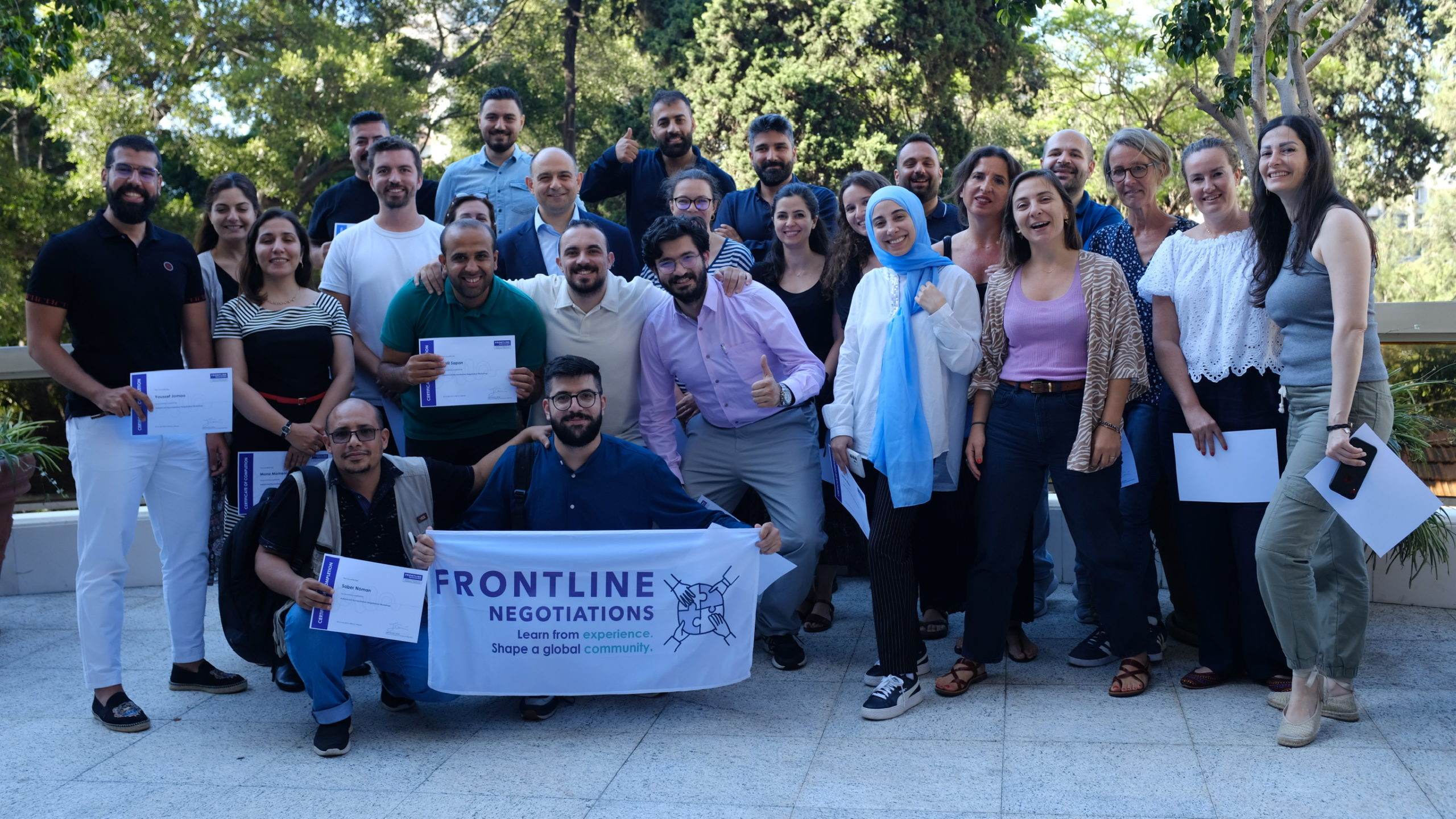
When you attend one of our negotiation trainings, you participate in a safe and confidential space where you learn and test your newly acquired skills, and exchange experiences and advice with experienced peers and colleagues.
If you’re ready to boost your negotiation skills, join our upcoming workshops:
march, 2026
5. Pair up with a mentor
Creating the time and space to reflect on your current or past negotiations, exchange on your experiences, and brainstorm solutions with someone who understands your unique challenges can go a long way in humanitarian negotiations.
There are multiple mentoring programmes available for humanitarians, for instance:
- Mentoring programmes for United Nations staff, like the JPOSC Career Mentoring Programme or the general UN mentoring programme
- Internal organisational programmes (many agencies like IOM, MSF, WFP and WHO offer these)
- Humanitarian-sector-wide programmes, like the ones offered by the Humanitarian Leadership Academy programme or Women in Aid and Development.
- Specialist programmes, like the Global Nutrition Cluster, Child Protection Area of Responsibility or the CCHN mentoring programme for humanitarian negotiators.
If you are a humanitarian negotiator, the CCHN mentoring programme helps you establish a one-on-one relationship with another experienced negotiator within the CCHN community, with whom you can exchange and reflect on your negotiation experiences, according to your personal needs.
Interested in the programme? Discover our mentoring programme today!
Next steps
Now it’s time to turn intentions into action.
Choose one or two of these resolutions to start with. Review your progress periodically and adjust as needed. Sustainable change takes time.
Keep an eye on this space for more resources, or sign up for our monthly newsletter to receive regular encouragement and practical ideas for strengthening your negotiation practice throughout the year.
Want more negotiation tips? Explore our other posts.